

It’s a journey to cherish small moments, forging meaning through connections, growth, and learning.
From Other Voices
Collected quotations from writers I return to
Source: https://www.brainyquote.com/topics/life-quotes

One of the foremost Founding Fathers of the United States. He was an author, inventor, scientist, printer,
publisher, and diplomat.
Born: January 17, 1706, Boston, Massachusetts
Died: April 17, 1790 (aged 84), Philadelphia, Pennsylvania, USA

Jamaican singer-songwriter and musician, regarded as one of the pioneers of reggae.
He helped popularise the genre worldwide.
Born: February 6, 1945, Nine Miles, St. Ann, Jamaica
Died: May 11, 1981 (aged 36), Miami, Florida, USA

American comedian, actor, singer and published author. He wrote ‘Gracie: A Love Story’ (1988)
and ‘All My Best Friends’ (1989), among other books, earning him the title of best-selling author.
Born: Nathan Birnbaum (Original Name), January 20, 1896, New York, New York, USA
Died: March 9, 1996 (aged 100), Beverly Hills, California

American basketball coach for the UCLA Bruins. Under Wooden’s coaching and support, the UCLA Bruins
secured the Pacific Conference titles in 1952, 1956, 1962, and 1963, and claimed the NCAA
Championship in 1964. In 1976, the American Academy of Achievement awarded Wooden
the Golden Plate Award, recognising him as a UCLA coaching legend and an icon of American sport.

German mystic, Catholic priest, theologian, and philosopher. Born as Johannes Eckhart, commonly
known as Master Eckhart. His mystical experiences and spiritual philosophies made him popular.
However, in 1326, he was charged and found guilty by the Archbishop of Cologne for violating and
misusing a sacred, established religious belief, which tarnished his reputation. Some of his writings
were criticised and denounced by the Pope.

An Anglo-Irish author, essayist, poet, and dramatist. He was renowned for his works, including the series
of essays The Citizen of the World (1762), his poem The Deserted Village (1770), the novel The Vicar
of Wakefield (1766), and the play She Stoops to Conquer (1773).
Born: 10 November 1730, Kilkenny West, County Westmeath, Ireland.
Died: 4 April 1774 (aged 43), London
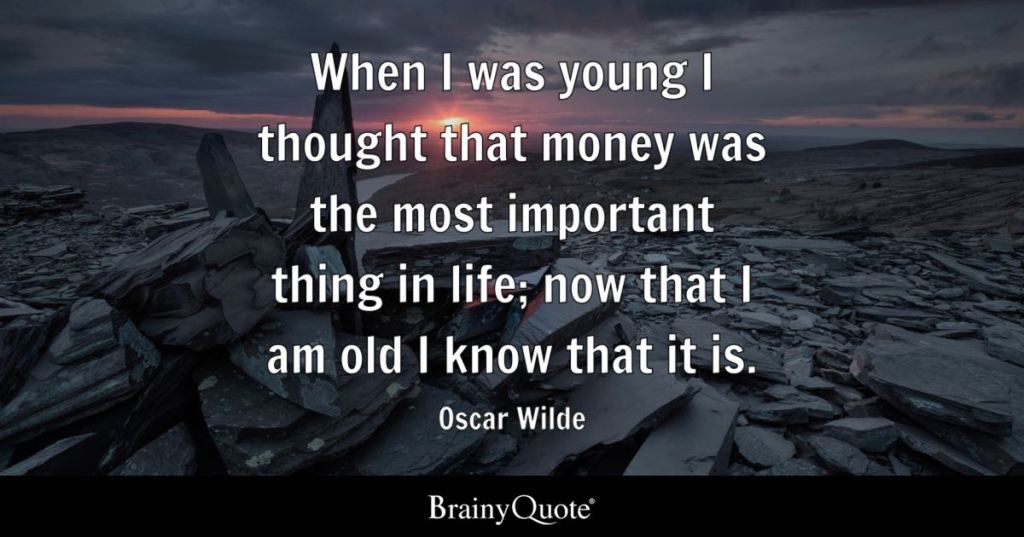
An Irish author, playwright, dramatist, poet, novelist and short story writer. He was known
for his only novel, The Picture of Dorian Grey (1891), and his comic masterpieces,
Lady Windermere’s Fan (1892), and The Importance of Being Earnest (1895).
Born: October 16, 1854, Dublin, Ireland
Died: November 30, 1900, Paris, France
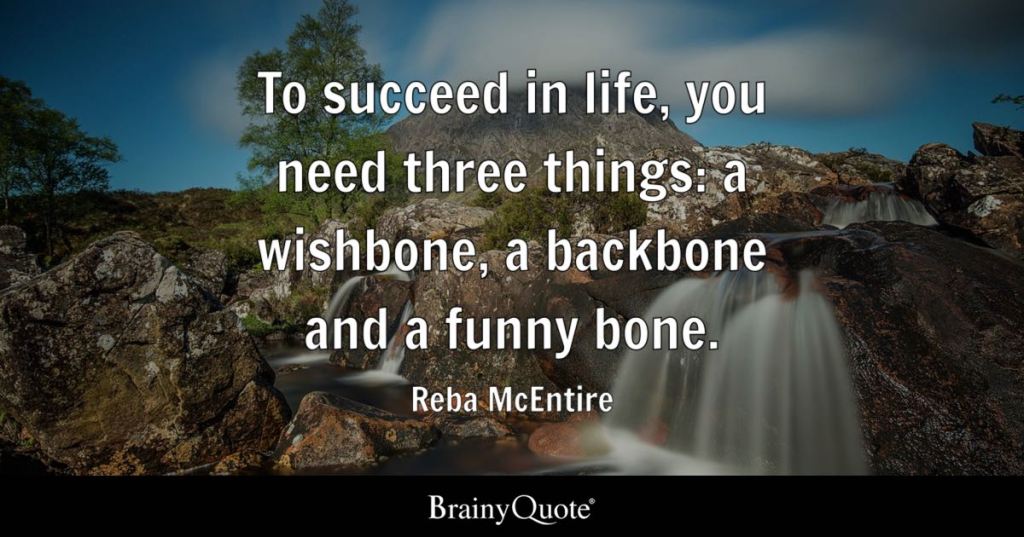
An American country singer-songwriter and actress, known as The Queen of Country Music.
She was awarded seven gold and five platinum albums and two Grammy Awards.
Born: Reba Nell McEntire, March 28, 1955, McAlester, Oklahoma, USA

American businessman and inventor, Co-founder, Chairman and CEO of Apple Inc.
As CEO of the company, Steve Jobs fostered the development of the iMac, iTunes, iPod, iPhone, and iPad
as well as the company’s Apple Retail Stores, iTunes Store, and App Store, which helped Apple become
the world’s most valuable publicly listed company in 2011.

Theodor Geisel, known as Dr Seuss, was an American children’s author, illustrator, poet,
political cartoonist, and filmmaker. His published works include The Cat in the Hat,
How the Grinch Stole Christmas! Horton Hears a Who, and Green Eggs and Ham.
Born: March 2, 1904, in Springfield, Massachusetts
Died: September 24, 1991 (aged 87) in La Jolla, California

British journalist, political analyst, and economist. He gained considerable influence through his
editorship of The Economist. He authored three books: The English Constitution (1867),
Physics and Politics (1872), and Lombard Street (1873).
Born: February 3, 1826, in Langport, Somerset, England
Died: March 24, 1877 (aged 51) in Langport, Somerset, England

A Scottish author, radio and television presenter, and who served as a Minister of the Church of Scotland in 1933.
He lectured on New Testament language and literature in 1947 and later became Professor of Divinity and
Biblical Criticism at the University of Glasgow in 1963.
Born on December 5, 1907, in Wick, Scotland, he passed away on January 24, 1978, at the age of 70 in Glasgow, Scotland.
Till next time.
Cheers!

References
Benjamin Franklin – Printer, junto, experiments on electricity. (1999, August 9). Encyclopedia Britannica. https://www.britannica.com/biography/Benjamin-Franklin/Achievements-and-inventions
George Burns, American comedian. (2024, November 21). Encyclopedia Britannica. https://www.britannica.com/biography/George-Burns
John Wooden. (2024, February 26). Academy of Achievement. https://achievement.org/achiever/john-wooden/
Life quotes. (n.d.). BrainyQuote. https://www.brainyquote.com/topics/life-quotes
Looking back: This man Barclay. (n.d.). Life and Work. https://www.lifeandwork.org/features/looking-back-this-man-barclay
Meister Eckhart biography |. (2019, March 6). Biography Online. https://www.biographyonline.net/spiritual/meister-eckhart.html
Oliver Goldsmith. (n.d.). Research Begins Here – New World Encyclopedia. https://www.newworldencyclopedia.org/entry/Oliver_Goldsmith
Oscar Wilde. (n.d.). Research Begins Here – New World Encyclopedia. https://www.newworldencyclopedia.org/entry/Oscar_Wilde
Reba McEntire. (2007, September 6). Encyclopedia Britannica. https://www.britannica.com/biography/Reba-McEntire
Steve Jobs. (n.d.). Research Begins Here – New World Encyclopedia. https://www.newworldencyclopedia.org/entry/Steve_Jobs
Theodor Geisel (Dr. Seuss). (n.d.). Poetry Foundation. https://www.poetryfoundation.org/poets/theodor-geisel
Thomas, T., & White, A. (1999, December 2). Bob Marley, Jamaican Musician. Encyclopedia Britannica. https://www.britannica.com/biography/Bob-Marley
Walter Bagehot. (n.d.). Research Begins Here – New World Encyclopedia. https://www.newworldencyclopedia.org/entry/Walter_Bagehot





























 ninagracia.com