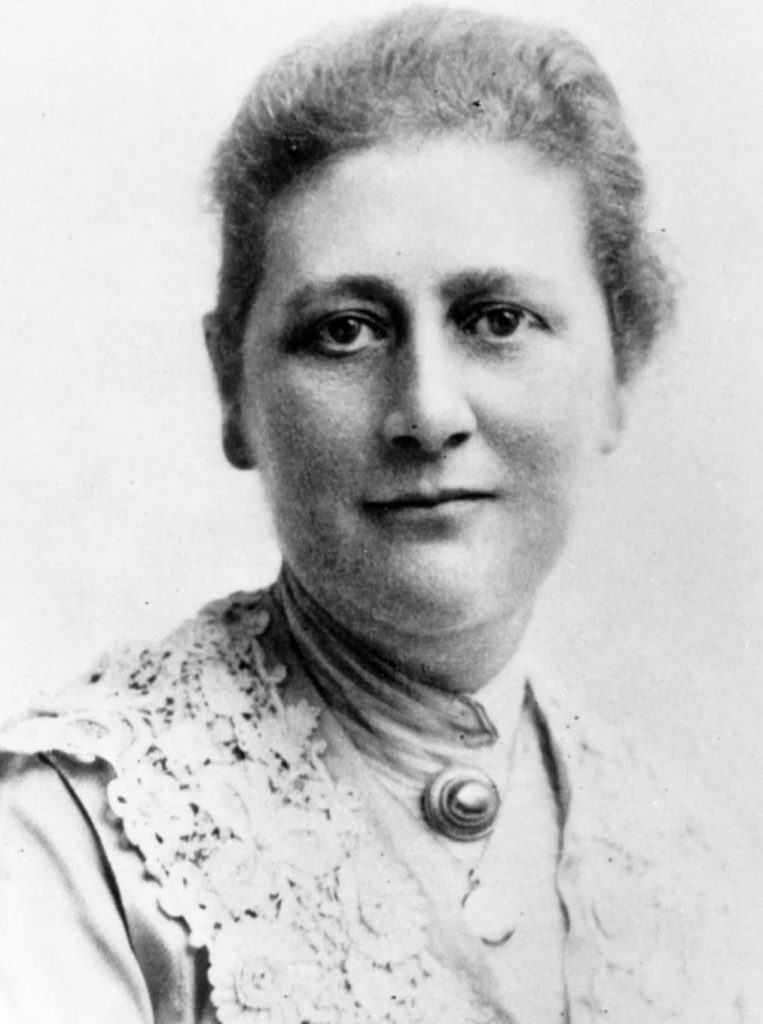

Beatrix Potter

Guess Who?
Biographies of writers, thinkers, and inspiring lives


“I remember I used to half-believe and wholly play with fairies when I was a child. What heaven can be more real than to retain the spirit-world of childhood, tempered and balanced by knowledge and common-sense?”

 – Beatrix Potter
Journal, November 17, 1896 from the National Trust collection
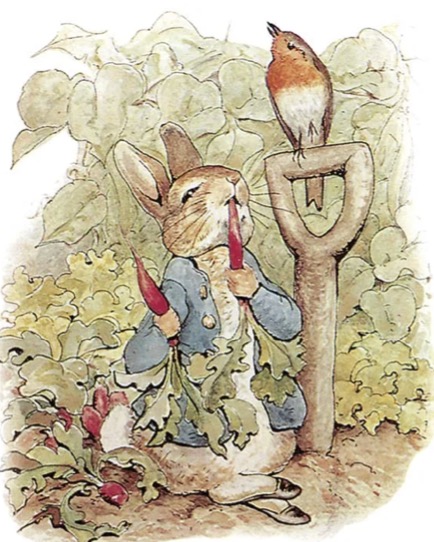
BEATRIX POTTER

Author and Illustrator

It was a cartoon character created on September 4, 1893, by a British author and illustrator, and it was sent in a letter to a four-year-old sick little boy. In her letter to him, she wrote that she didn’t know what to write, so she would tell him a story with drawings about the four little rabbits named Flopsy, Mopsy, Cottontail, and Peter.

The author and illustrator was Helen Beatrix Potter, and the four-year-old boy was Noel Moore, the son of her former governess, Annie Moore. Her first picture letter to Noel served as the basis for her book, which featured black-and-white illustrations. From that letter, she developed the illustrated book The Tale of Peter Rabbit, which she self-published in 1901 and which Frederick Warne & Co. published in 1902, making it one of the best-selling children’s books.

The character Peter Rabbit was shaped by Edwardian cultural, social, and aesthetic attitudes in the United Kingdom and was intended to introduce young readers to the dangers of the adult world and the consequences of their actions.

Born on July 28, 1866, in Bolton Gardens, Kensington, England, Helen Beatrix Potter was the daughter of Rupert Potter, a wealthy barrister whose family owned a textile printing business, and Helen, who was a wealthy cotton merchant. The Potters were upper-middle-class and moved to London from the industrial North to adopt London sophistication. However, they were often drawn back to the countryside. Beatrix’s parents left her in the care of nursemaids, governesses, and servants. She was educated at home by a succession of governesses, the last of whom, Annie Moore, was three years older than she. She had no contact with other children until her brother, Bertram, was born when she was five years old. The siblings were left to find their own sources of amusement. The large upper floor of the nursery became their play area, and there, surrounded by piles of illustrated books and magazines, Beatrix discovered her talent and passion for drawing. Both siblings shared a passion for the arts and nature. They kept several pets, including mice, frogs, bats, rabbits, and even hedgehogs, and collected butterflies and other insects.

In the 1890s, Beatrix continued to send stories and drawings to Noel and his siblings, shaping the early versions of the characters in Peter Rabbit, The Tale of Benjamin Bunny, The Tale of Squirrel Nutkin, and The Tale of Mr Jeremy Fisher. Beatrix and Annie Moore became close friends, a bond that endured into Beatrix’s adulthood. Annie recognised the potential in Beatrix’s work and suggested that Beatrix could turn those stories into published children’s books.

Beatrix used most of her time recording her pets’ expressions and movements, paying particular attention to the rabbits Benjamin Bouncer and Peter Piper, whose names and appearances inspired the characters Benjamin Bunny and Peter Rabbit.

Beatrix maintained her relationship with her publisher, Frederick Warne and Co., for many years, and it became personal when she became romantically involved with his son and editor, Norman Warne. She accepted his proposal of marriage in 1905, but he died of leukaemia a month after they announced their wedding plans.

By 1930, Beatrix had given up writing entirely after marrying her local solicitor, William Heelis. She devoted her time to being his wife and to farming. In her sixties, she became an accomplished sheep farmer. This role led to her election as president of the Herdwick Sheep Breeders Association.

On December 22, 1943, Beatrix died of complications from pneumonia and heart disease, leaving several thousand acres of land to Great Britain’s National Trust to ensure the beauty of the Lake District remained in a pure, natural state. She also left a legacy of enchanting stories that have entertained and engaged generations of children. Her stories continue to sell millions of copies a year.

Till next time.

Cheers!

References

Beatrix Potter. (2018, May 18). Encyclopedia.com | Free Online Encyclopedia. https://www.encyclopedia.com/people/literature-and-arts/english-literature-20th-cent-present-biographies/beatrix-potter

Beatrix Potter. (2025, December 6). Encyclopedia Britannica. https://www.britannica.com/biography/Beatrix-Potter

Beatrix Potter. (n.d.). Research Begins Here – New World Encyclopedia. Retrieved April 21, 2026, from https://www.newworldencyclopedia.org/entry/Beatrix_Potter#google_vignette

Brain, J. (n.d.). Beatrix Potter. Historic UK. https://www.historic-uk.com/CultureUK/Beatrix-Potter/

Cavendish, R. (2016, July 7). Birth of Beatrix Potter. History Today66https://www.historytoday.com/archive/months-past/birth-beatrix-potter

Encyclopaedia Britannica. (n.d.). Beatrix Potter [Image]. Encyclopaedia Britannica. https://www.britannica.com/biography/Beatrix-Potter#/media/1/453826/159016

Encyclopaedia Britannica. (n.d.). Peter Rabbit [Image]. Encyclopaedia Britannica. https://www.britannica.com/biography/Beatrix-Potter#/media/1/453826/159016

Stamler, H. (2024). Beatrix Potter’s quiet rebellion. National Endowment for the Humanities45(4).https://www.neh.gov/article/beatrix-potters-quiet-rebellion
Guess Who?

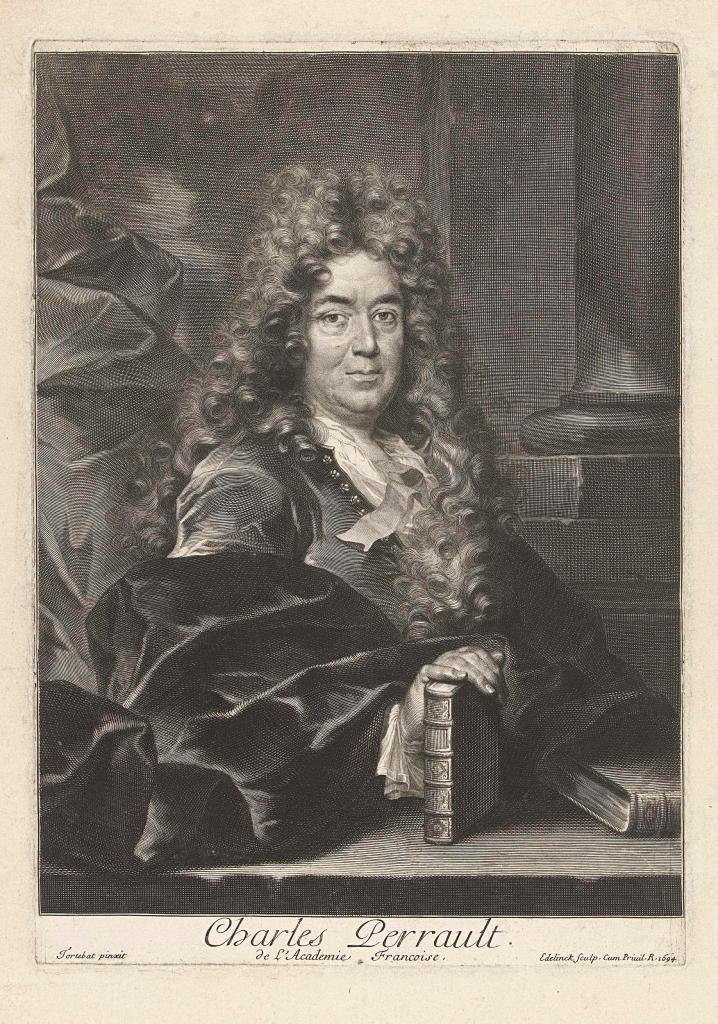
Charles Perrault

Author of Cinderella and The Sleeping Beauty

Picture by: https://www.lookandlearn.com/history/Charles+perrault

French author Charles Perrault was the seventh child in a wealthy family, the youngest son of the distinguished barrister Pierre Perrault and Paquette Le Clerc. He was born on January 12, 1628, in Paris. He attended school and studied law to follow in his father’s footsteps and his older brother, Jean’s. Still, he dropped out after arguing with his teacher at age fifteen. He studied independently and prepared for his exams mainly on his own. He successfully obtained his law degree and passed the bar, but never practised as a lawyer. He worked in a law office for three years before becoming Secretary to his brother Pierre, who was appointed Chief Tax Collector of Paris. Buying official government positions was common in France during the seventeenth century and was often used for self-aggrandisement. Pierre appointed Perrault as his clerk. He briefly worked under his brother before becoming a civil servant in the court of King Louis XIV. 

In 1663, Perrault was appointed Secretary to the Academy of Inscriptions and Belles-Lettres, a society of scholars established by Jean-Baptiste Colbert, Finance Minister to King Louis XIV, to assist with arts, sciences, and literature. Then, in 1665, Perrault took on the role of First Commissioner of Royal Buildings, which allowed him to appoint his brother, Claude, a doctor and architect, to complete the Louvre, build the Observatory of Paris, and decorate La Place du Trône. 

Perrault’s bravery and intellectual skills were apparent after his election to the prestigious French Academy. He played a significant role in literary debates of his time, stirring controversy within the Académie française with his poem Le Siècle de Louis le Grand. This poem asserted that modern French culture outshone classical antiquity. This view became the central argument in the well-known Quarrel of the Ancients and the Moderns, a cultural dispute favouring contemporary writers over classical ones. 

Charles Perrault is best known for his collection of fairy tales, published in 1697. He was 69 when he published Tales and Stories of the Past with Morals (‘Histoires ou Contes du Temps Passé’). The book was subtitled Tales of Mother Goose (Les Contes de ma Mère l’Oye), with eight fairy tales in prose, a short story, and two tales in verse previously published. Based on oral traditions and folklore, these stories were reimagined and written in a polished literary style, making them accessible to children and adults. Fearful of criticism from the ‘Ancients’ and seeking to introduce the youth to society, Perrault published his collection under the name of his last son, Pierre Perrault Darmancourt, who was 19 years old at the time. It is important to note that Perrault wrote all the collections of stories published under his son’s name.

  1. Cinderella, or The Little Glass Slipper (Cendrillon)
  2. Sleeping Beauty (La Belle au Bois dormant)
  3. Bluebeard (Barbe Bleue)
  4. Little Red Riding Hood (Le Petit Chaperon Rouge)
  5. Puss in Boots (Le Maître Chat, ou Le Chat Botté)
  6. The Fairy (Les Fées)
  7. Riquet with the Tuft (Riquet à la houppe)
  8. Donkeyskin (Peau d’âne)
  9. Griselda (La Marquise de Saluces ou la Patience de Griseldis)
  10. The Ridiculous Wishes (Les Souhaits ridicules)
  11. Donkeyskin (Peau d’âne)

Perrault initially wrote in verse in 1694, including Griselda (La Marquise de Saluces ou la Patience de Griseldis), The Ridiculous Wishes (Les Souhaits ridicules), and Donkeyskin (Peau d’âne). He then rewrote and published these three stories as prose, alongside eight other fairy tales, in his 1697 collection. This was a significant achievement that helped him establish a new literary genre. This fairy tale earned Perrault the title of the father of fairy tales

Charles Perrault’s legacy continues to inspire literature, art, and popular culture, as evidenced by Tchaikovsky’s The Sleeping Beauty and Walt Disney’s adaptations. The unique morals in their stories still teach children and adults about kindness, patience, and humility. 

Charles Perrault influenced the fairy tale genre, inspiring other writers to follow his lead. His works laid the groundwork for the modern fairy tale. They inspired many future writers, including the Brothers Grimm, establishing their role as the pioneers of the contemporary fairy tale. 

Perrault passed away on May 16, 1703, in Paris at 75, creating a legacy that brought wonders and inspiration to children’s literature.

Till next time,

Cheers

References

Charles Perrault | Biography, books and fairy tales | Pook press. (2019, January 10). Pook Press | Illustrated Fairy Tales, Folk Tales and Children’s Classics. https://www.pookpress.co.uk/project/charles-perrault-biography

Charles Perrault, a multifaceted man. (2021, April 14). Château de Breteuil et ses jardins (site officiel).https://www.breteuil.fr/en/charles-perrault-a-multifaceted-man/

Charles Perrault. (n.d.). Encyclopedia.com | Free Online Encyclopedia. https://www.encyclopedia.com/children/academic-and-educational-journals/charles-perrault

Charles Perrault. (n.d.). NNDB: Tracking the entire world. https://www.nndb.com/people/715/000097424

Charles Perrault. (n.d.). Research Begins Here – New World Encyclopedia. https://www.newworldencyclopedia.org/entry/Charles_Perrault

Charles Perrault: How he became father of the Fairytale at age 69 – Later bloomer. (n.d.). Later Bloomer – A Captivating Archive of Lives Well-Lived. https://laterbloomer.com/charles-perrault/

Stan Lee

Oops! That was the most extended coffee break ever! 

I didn’t mean for the break to last this long, but sometimes we just need to sit down with a good cuppa to enjoy the sweet moments and unwind a bit. And of course, while I’ve been jotting down notes and collecting sparks of inspiration, I’ll share a few with you today.

Stan Lee

Marvel Superhero Stock Photos by Vecteezy

He said, “With great power comes great responsibility.” In his comics, he signed off with his catchphrase, “Excelsior,” and shouted “Excelsior” at a convention. He doesn’t need an introduction because he created unique but imperfect characters whose flaws, personal struggles, and feelings, like real people, make them very different from the ideal heroes of the past. He showed that even superheroes have flaws, and that anyone, even ordinary folks, can be extraordinary. If you know Spider-Man, The Fantastic Four, and the X-Men, to name a few, among the hundreds of characters he created, then you would know that Stan Lee was the creator of these iconic superheroes and one of the most influential figures in the world of popular culture that we all know and love. 

Born Stanley Martin Lieber on December 28, 1922, in Manhattan, New York City, Lee was the eldest of two sons of Jack Lieber and Celia Solomon Lieber, Jewish immigrants from Romania. Lee grew up during the Great Depression and faced financial struggles with his family. His father was a tailor working in Manhattan’s Garment District. Lee’s younger brother, Larry Lieber, became a Marvel comic writer and artist.

Stan Lee used a pseudonym to hide his real name. He explained that he wanted to keep his real name for writing serious literature. He loved reading and dreamed of creating stories. However, as we now know, his dream of becoming a novelist never came true; he became a comic book writer, editor, and publisher. 

He finished school at DeWitt Clinton High School in the Bronx, and at 16, he got his first job in the comic book industry through his cousin, who was married to Martin Goodman. Stan Lee worked as an errand boy at Timely Comics, a company owned by Martin Goodman, which later became known as Marvel Comics. Initially, he earned just eight dollars a week doing simple tasks like making sure the artists had ink, picking lunches, sharpening pencils, making coffee, proofreading, and erasing pencil marks from finished pages.

In May 1941, his first credited work was the story “Captain America Foils the Traitor’s Revenge,” which appeared in the third issue of the Captain America series. He signed the name “Stan Lee”. He split his first name into two parts (Stan-Lee). It was the first time he used his pen name, and then, in the 1970s, he officially changed his surname from Lieber to Lee, which became his legal name. Here, Stan Lee worked with artist Jack Kirby and writing partner Joe Simon. Then, in August that year, he created his first superhero, The Destroyer.

When the rival DC Comics made Justice League of America popular in the late 1950s, Marvel Comics asked Stan Lee to create a new superhero team. Taking his wife’s advice, Joan Clayton Boocock, whom he married in 1947, he developed heroes with flaws and real-life problems. Alongside artist Jack Kirby, the success of The Fantastic Four encouraged them to create more heroes. He became a co-creator of Marvel Comics’ most famous superheroes, such as the X-Men, Iron Man, Thor, the Hulk, and Black Panther. After that, he created Daredevil with Bill Everett, Doctor Strange with Steve Ditko, and Marvel’s iconic Spider-Man. Lee, Kirby, and Ditko used a technique that gave artists more input on story outlines to develop new content. The artists handled the drawings, and Lee added dialogue and captions afterwards. Working with artists like Jack Kirby and Steve Ditko, Stan Lee revolutionised the comic book industry in the 20th century. 

When Jack Kirby and Joe Simon left the company after a dispute with Goodman, Lee was only 19 when he was appointed assistant editor. Soon after, in 1972, Marvel Group appointed Stan Lee as publisher and editorial director.

Pinpointing the exact number of books Stan Lee authored over his lifetime is challenging—mainly because he wrote and co-wrote hundreds across various formats like novels, memoirs, instructional art books, collections, reissues, and even comic adaptations. Fiction DB lists a surprising 436 books under Stan Lee’s name—although this probably includes reprints, anthologies, collections, and graphic novel entries. Given the variation, it’s safe to say that at least 400 titles are attributed to him. Regarding superhero characters, while precise counting is difficult due to co-creation credits and minor character entries, Stan Lee is widely credited with co-creating over 300 Marvel characters—including about 60 major superheroes such as Spider-ManThe Fantastic FourIron Man, Thor, The Hulk, X-Men, and others.

Stan Lee received numerous awards, but the highest honour for artists in the United States was President George W. Bush’s National Medal of Arts in 2008.

His wife, Joan Boocock, passed away in 2017. They had one daughter, Joan Celia (J.C.) Lee. The following year, on November 12, 2018, Stan Lee died at the age of 95.

With a shout of “Excelsior!” Stan Lee filled comic books with heroes who made readers believe that adventure could be found anywhere—even in everyday life.

References

Kodweis, M. (2020). Excelsior!: Stan Lee’s philosophy for Liberty and Justice for All. History | Senior Theses. 3, 1-38. https://doi.org/10.33015/dominican.edu/2020.HIST.ST.06

“Lee, Stan (1922—) .” St. James Encyclopedia of Popular Culture. (n.d.). Encyclopedia.com | Free Online Encyclopedia. Retrieved September 3, 2025, from https://www.encyclopedia.com/media/encyclopedias-almanacs-transcripts-and-maps/lee-stan-1922

Malik, E. (2023, November 8). Stan Lee Timeline. Office Timeline. https://www.officetimeline.com/stan-lee-timeline

Murrian, S. R. (2024, November 16). Excelsior! 100 Stan Lee Quotes About Courage, Optimism and Success. Parade. https://parade.com/1113871/samuelmurrian/stan-lee-quotes

Rizzuto, M. (2024, November 10). Thoughts on Stan Lee by Matthew Rizzuto. Comic Book Historians. https://comicbookhistorians.com/thoughts-on-stan-lee-by-matthew-rizzuto/

Stan Lee Legacy. (n.d.). confinity.com. https://www.confinity.com/legacies/stan-lee

Stan Lee stock photos, images and backgrounds for free download. (n.d.). Vecteezy. https://www.vecteezy.com/free-photos/stan-lee

Stan Lee. (2009, December 4). Encyclopedia Britannica. https://www.britannica.com/biography/Stan-Lee

Stan Lee. (n.d.). FictionDB – Your Guide to Fiction Books and Series. https://www.fictiondb.com/author/author.php?authorid=21283&ltyp=3&sort=da

Universe, S. L. (2022, July 8). Stan Lee’s San Diego comic con. The Real Stan Lee. https://therealstanlee.com/life-of-an-icon/stan-lees-san-diego-comic-con/