

Guess Who?
Biographies of writers, thinkers, and inspiring lives
– Beatrix Potter
Journal, November 17, 1896 from the National Trust collection
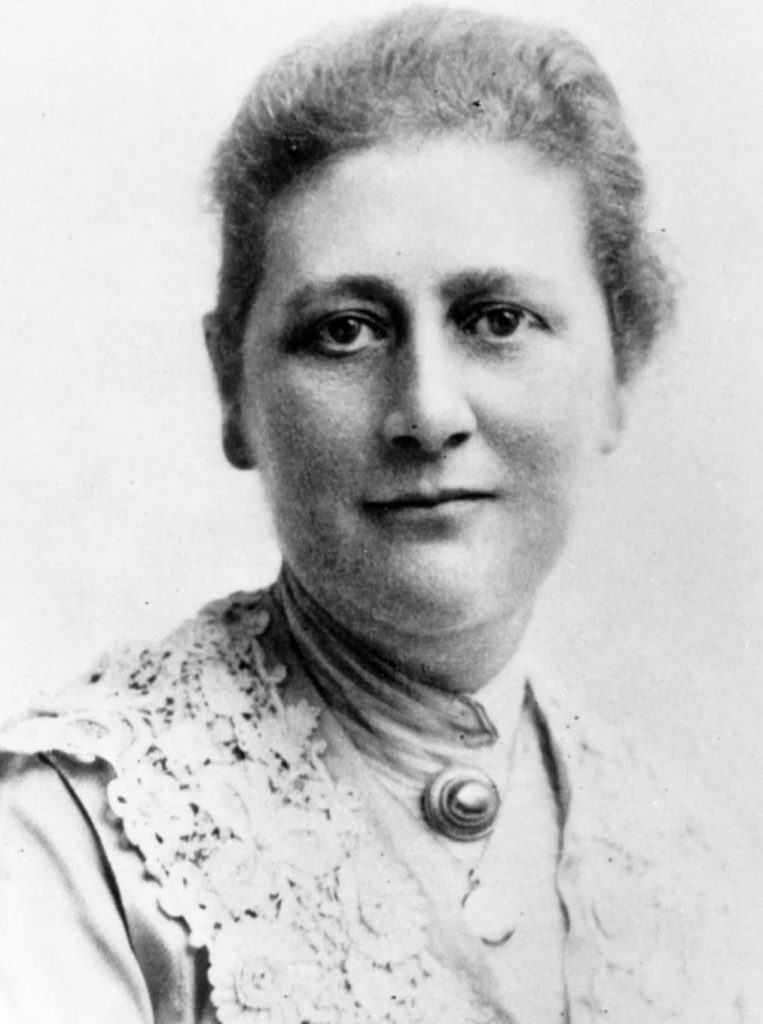
BEATRIX POTTER
Author and Illustrator
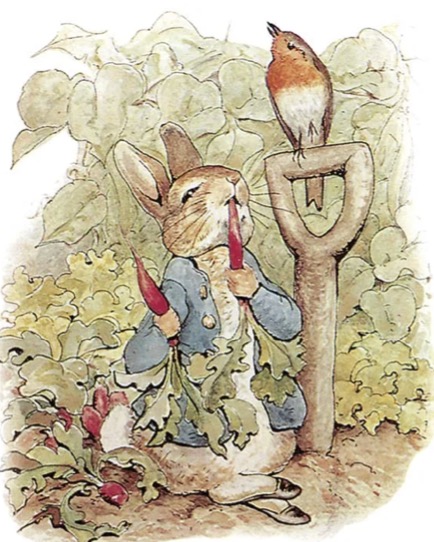
It was a cartoon character created on September 4, 1893, by a British author and illustrator, and it was sent in a letter to a four-year-old sick little boy. In her letter to him, she wrote that she didn’t know what to write, so she would tell him a story with drawings about the four little rabbits named Flopsy, Mopsy, Cottontail, and Peter.
The author and illustrator was Helen Beatrix Potter, and the four-year-old boy was Noel Moore, the son of her former governess, Annie Moore. Her first picture letter to Noel served as the basis for her book, which featured black-and-white illustrations. From that letter, she developed the illustrated book The Tale of Peter Rabbit, which she self-published in 1901 and which Frederick Warne & Co. published in 1902, making it one of the best-selling children’s books.
The character Peter Rabbit was shaped by Edwardian cultural, social, and aesthetic attitudes in the United Kingdom and was intended to introduce young readers to the dangers of the adult world and the consequences of their actions.
Born on July 28, 1866, in Bolton Gardens, Kensington, England, Helen Beatrix Potter was the daughter of Rupert Potter, a wealthy barrister whose family owned a textile printing business, and Helen, who was a wealthy cotton merchant. The Potters were upper-middle-class and moved to London from the industrial North to adopt London sophistication. However, they were often drawn back to the countryside. Beatrix’s parents left her in the care of nursemaids, governesses, and servants. She was educated at home by a succession of governesses, the last of whom, Annie Moore, was three years older than she. She had no contact with other children until her brother, Bertram, was born when she was five years old. The siblings were left to find their own sources of amusement. The large upper floor of the nursery became their play area, and there, surrounded by piles of illustrated books and magazines, Beatrix discovered her talent and passion for drawing. Both siblings shared a passion for the arts and nature. They kept several pets, including mice, frogs, bats, rabbits, and even hedgehogs, and collected butterflies and other insects.
In the 1890s, Beatrix continued to send stories and drawings to Noel and his siblings, shaping the early versions of the characters in Peter Rabbit, The Tale of Benjamin Bunny, The Tale of Squirrel Nutkin, and The Tale of Mr Jeremy Fisher. Beatrix and Annie Moore became close friends, a bond that endured into Beatrix’s adulthood. Annie recognised the potential in Beatrix’s work and suggested that Beatrix could turn those stories into published children’s books.
Beatrix used most of her time recording her pets’ expressions and movements, paying particular attention to the rabbits Benjamin Bouncer and Peter Piper, whose names and appearances inspired the characters Benjamin Bunny and Peter Rabbit.
Beatrix maintained her relationship with her publisher, Frederick Warne and Co., for many years, and it became personal when she became romantically involved with his son and editor, Norman Warne. She accepted his proposal of marriage in 1905, but he died of leukaemia a month after they announced their wedding plans.
By 1930, Beatrix had given up writing entirely after marrying her local solicitor, William Heelis. She devoted her time to being his wife and to farming. In her sixties, she became an accomplished sheep farmer. This role led to her election as president of the Herdwick Sheep Breeders Association.
On December 22, 1943, Beatrix died of complications from pneumonia and heart disease, leaving several thousand acres of land to Great Britain’s National Trust to ensure the beauty of the Lake District remained in a pure, natural state. She also left a legacy of enchanting stories that have entertained and engaged generations of children. Her stories continue to sell millions of copies a year.
Till next time.
Cheers!
References
Beatrix Potter. (2018, May 18). Encyclopedia.com | Free Online Encyclopedia. https://www.encyclopedia.com/people/literature-and-arts/english-literature-20th-cent-present-biographies/beatrix-potter
Beatrix Potter. (2025, December 6). Encyclopedia Britannica. https://www.britannica.com/biography/Beatrix-Potter
Beatrix Potter. (n.d.). Research Begins Here – New World Encyclopedia. Retrieved April 21, 2026, from https://www.newworldencyclopedia.org/entry/Beatrix_Potter#google_vignette
Brain, J. (n.d.). Beatrix Potter. Historic UK. https://www.historic-uk.com/CultureUK/Beatrix-Potter/
Cavendish, R. (2016, July 7). Birth of Beatrix Potter. History Today, 66. https://www.historytoday.com/archive/months-past/birth-beatrix-potter
Encyclopaedia Britannica. (n.d.). Beatrix Potter [Image]. Encyclopaedia Britannica. https://www.britannica.com/biography/Beatrix-Potter#/media/1/453826/159016
Encyclopaedia Britannica. (n.d.). Peter Rabbit [Image]. Encyclopaedia Britannica. https://www.britannica.com/biography/Beatrix-Potter#/media/1/453826/159016
Stamler, H. (2024). Beatrix Potter’s quiet rebellion. National Endowment for the Humanities, 45(4).https://www.neh.gov/article/beatrix-potters-quiet-rebellion
 ninagracia.com