
As You Go Through Life

In conversation with the poems

Poems by others, read closely and answered in reflection.

Ella Wheeler Wilcox’s poem “As You Go Through Life” is a gentle reminder and an invitation to reflect on how we respond to life’s inadequacies, challenges, and purpose. Reading it today, I was struck by how relevant its message is in a world that often encourages complaint rather than compassion.

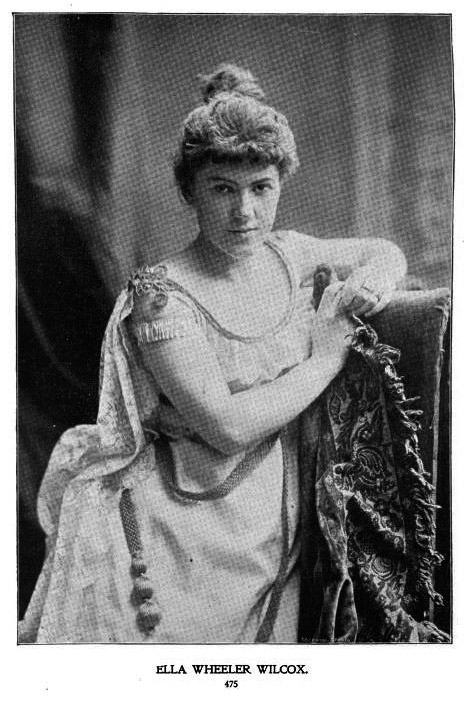
Picture by: https://commons.wikimedia.org/wiki/File:Ella_Wheeler_Wilcox,_1896.jpg

Ella Wheeler Wilcox

“A Life Shaped by Hard-won Wisdom”

            Isabella Wheeler, also known as Ella Wheeler, was born in Johnstown, Wisconsin, USA, on November 5, 1850. She was an American poet, journalist, and novelist whose work in the 19th and 20th centuries provided insightful reflections on life, love, and perseverance. Her style and themes often relate to and carefully blend her personal experiences with ideas of change, suffering, sentiments, and human emotions.

            Wilcox’s personal experiences shaped her writing, including financial struggles, a near-fatal bout with typhoid fever, and the intricacies of her 1884 marriage to Robert Wilcox.

            She died in 1919, leaving behind a body of memorable work that established her as a captivating figure in American literature.

As You Go Through Life
By
Ella Wheeler Wilcox


Don't look for the flaws as you go through life;
And even when you find them,
It is wise and kind to be somewhat blind
And look for the virtue behind them.
For the cloudiest night has a hint of light
Somewhere in its shadows hiding;
It is better by far to hunt for a star,
Than the spots on the sun abiding.

The current of life runs ever away
To the bosom of God's great ocean.
Don't set your force 'gainst the river's course
And think to alter its motion.
Don't waste a curse on the universe—
Remember it lived before you.
Don't butt at the storm with your puny form,
But bend and let it go o'er you.

The world will never adjust itself
To suit your whims to the letter.
Some things must go wrong your whole life long,
And the sooner you know it the better.
It is folly to fight with the Infinite,
And go under at last in the wrestle;
The wiser man shapes into God's plan
As water shapes into a vessel.

Poem Interpretation

“As You Go Through Life” by Ella Wheeler Wilcox is composed of three stanzas of eight lines each, employing simple, direct language to convey timeless moral and spiritual truths.

In the first stanza, Wilcox acknowledges human faults and imperfections. Rather than encouraging judgment, she gently reminds us to look beyond shortcomings and recognise the goodness within people. This perspective calls for compassion—an attitude that reflects both emotional maturity and spiritual grace.

The second stanza highlights our tendency to complain when life gets tough. The line “Don’t waste a curse on the universe” acts as a reminder that resentment and blame hardly change our situation. Instead, challenges become opportunities—times that can build character, increase understanding, and teach patience if we let them.

In the final stanza, the poem offers a humbling realisation: the world does not exist to conform to our wishes. We are, instead, shaped by life’s experiences to fulfil a greater purpose. There is comfort in this idea—that even hardship may serve a sovereign design leading us towards meaning and growth.

Overall, Wilcox encourages readers to face life with humility and faith, trusting that what they encounter is not a coincidence. When seen this way, life’s trials become less heavy and more like blessings—quietly guiding us toward a greater sense of purpose aligned with God’s plan.

Till next time,

Cheers

References:

As you go through life by Ella Wheeler Wilcox. (n.d.). All Poetry – The world’s largest poetry site : All Poetry. https://allpoetry.com/As-You-Go-Through-Life

Ella Wheeler Wilcox. (1999, July 2). Encyclopedia Britannica. https://www.britannica.com/biography/Ella-Wheeler-Wilcox

Ella Wheeler Wilcox [Photographic Portrait]. (2016, January 15). commons.wikimedia.org. https://commons.wikimedia.org/wiki/File:Ella_Wheeler_Wilcox,_1896.jpg

Ella Wheeler Wilcox. (2025, November 18). Literary Devices. https://literarydevices.net/ella-wheeler-wilcox/#google_vignette

Ellan Wheeler Wilcox. (n.d.). Poetry Foundation. https://www.poetryfoundation.org/poets/ella-wheeler-wilcox

Mission Impossible: Dead Reckoning Part One

A Movie Review

While many moviegoers have already seen the eighth and final chapter of Mission: Impossible—The Final Reckoning in May 2025, I decided to revisit the 2023 Dead Reckoning Part One, because something is captivating about this seventh instalment. I’ve seen both, but this is one of the franchise’s most daring and entertaining entries. It links Ethan Hunt’s past and future while setting up for a compelling grand finale. 

Taking a closer look at the mission: The impossible spy genre that spans seven films over three decades.

Only one person can save the entire universe when the world is in great danger. It took him only two hours and forty-three minutes to save the world, simply by his death-defying motorcycle ride off a cliff in the Alps, the car chase in Rome that went a bit too long, skydiving over jagged mountain terrain, and fighting the wrong guy atop the Orient Express train through the Alps.

If you choose to accept your mission, Tom Cruise will deliver more action scenes—scene after scene—as the superhero agent Ethan Hunt. 

The seventh instalment of Mission: Impossible-Dead Reckoning Part One took the global box office hit after its release on July 12, 2023, intensifying 20th-century technology. Dead Reckoning is impossibly full of action and surprises. But what surprises me the most is that the title is unclear and difficult to interpret and understand. So, what does Dead Reckoning mean, anyway? “Dead Reckoning” is a subheader that adds an ominous feeling of great fear or apprehension, a little threatening, and thoroughly moving. So, if you reckon the bad guys are dead, it’s not what it means. That is why I consulted the Cambridge Dictionary, which says, “Dead Reckoning is a way of calculating the position of a ship or aircraft using only information about the direction and distance it has travelled from a known point.”

Since “Dead Reckoning” is a navigational term, the thrilling opening scene set aboard the Russian submarine is a great way to start the movie. With vision and directorial style, it pushes the boundaries of action and suspense slightly more. However, Christopher McQuarrie explained that aside from its true meaning, the title stands for something else. It represents a direct similarity between the words, not only for Ethan Hunt but also for a few other characters. Their past lives are beginning to catch up with them, and they must deal with their choices to stay alive. In other words, so many things are coming to the surface from Ethan and the members of his crew’s past lives that they must deal with to complete their dangerous missions and save the world from various threats.

Bruce Geller created the series Mission: Impossible, a group of government secret agents known as the Impossible Mission Force (IMF) from September 1966 to March 1973 on the CBS network for seven seasons, then returned to television for another season on ABC from 1988 to 1990. The Cold War, with American and Soviet tensions, provided a backdraft, leading to the 1950s’ severe suffering after the war. The series had no action. It was all about those precision moves, spy games that you could barely follow what was going on until the plot put together the puzzles, and you began to feel the rush. 

Mission: Impossible-Dead Reckoning Part One movie is the seventh entry in the franchise and has a two-part finale, both of which are timely reminiscences on the dangers of Artificial Intelligence (AI). In Part One, Ethan Hunt and the IMF team embark on the most dangerous mission to track down a terrifying form of artificial intelligence known as “The Entity” that is everywhere, has a mind of its own and endangers the world if it falls into the wrong hands. Once slotted together, two pieces of figures with a cross give a person access to The Entity. Ethan Hunt’s mission is to stop it from slipping into the wrong hands.

The movie delivers an endless rollercoaster of action, perfectly blending jaw-dropping stunts with a plot that keeps you guessing constantly. Cruise’s Ethan Hunt is at his best, running unstoppably with his upper body held upright. At 61 years old, his trim and compact physique showed no signs of slowing down. His endurance outsized his magnificent stunts, and the ensemble cast added depth to the powerful thrills. The pulse-pounding sequences and unexpected twists reaffirm the franchise’s mastery of the spy genre. 

Producers Tom Cruise, Christopher McQuarrie, and Leifur B. Dagfinnsson showcase their expertise by perfectly integrating heart-stopping action sequences with a well-crafted storyline. It kept viewers engaged with its electrifying action and heart-stirring stunts. Although opinions from the public on the movie may vary, the film put together an entirely different plot that adds depth to the characters, delivering a unique blend of suspense and scenes that keep the audience guessing. 

The film touches on fears and challenges by engaging the subjects of technological warfare and global uncertainty and reflecting each period’s evolving zeitgeist. It is a thrilling action movie that mirrors present-day concerns.

Till next time

Cheers

References:

Black, A. J. (2023, July 10). Mission impossible revisited: Brian de Palma’s mission impossible. Film Stories. https://filmstories.co.uk/features/mission-impossible-revisited-brian-de-palmas-mission-impossible/

Dead reckoning. (n.d.). Cambridge Dictionary | English Dictionary, Translations & Thesaurus. https://dictionary.cambridge.org/us/dictionary/english/dead-reckoning

May, N. (2023) A2Review [unpublished paper]. Curtin University.

Mission: Impossible 7 director discusses dead reckoning title meaning. (2022, November 23). Digital Spy. https://www.digitalspy.com/movies/a42048916/mission-impossible-dead-reckoning-meaning/

Mission: Impossible – Dead reckoning part one (2023). (n.d.). Gateway Film Center. https://gatewayfilmcenter.org/movies/mission-impossible-dead-reckoning-part-one-2023/

Paramount Pictures – https://www.missionimpossible.com/home/, Public Domain,. (n.d.). https://commons.wikimedia.org/w/index.php?curid=13498926

Phenomenal Woman

Every year, International Women’s Day (IWD) is celebrated in many countries worldwide on March 8 to honour all women and celebrate women’s social, economic, cultural, and political achievements.  

Today, I would like to share a beautiful poem by Maya Angelou. “Phenomenal Woman” is one of Angelou’s most famous poems, and it celebrates the most remarkable beauty and female strength, freshness, and vigour. The poem addresses the traditional expectation that the ideal feminine beauty was fashion models. But first, here’s a little bit about Maya Angelou.

Maya Angelou, born Marguerite Ann Johnson in St. Louis, Missouri, was born on April 4, 1928. Her nickname “Maya” was given to her by her older brother, Bailey. Angelou was an American poet, memoirist, writer, actor, director, and producer. She published several autobiographies, books of essays, and several books of poetries. Angelou had a distinguished career as a singer and dancer and performed professionally in the US, Europe, and northern Africa. She was a civil rights activist working with Dr Martin Luther King Jr. and Malcolm X (Poetry Foundation, n.d.).

Angelou lived with her paternal grandmother when she was young after her parents divorced. Four years later, Angelou returned to her mother briefly but was raped by her mother’s boyfriend when she was seven. He went to jail and got killed after being released from prison. She believed her confession led to the man’s death because she said his name. Angelou refrained from speaking and became temporarily speechless for six years. During this period of silence, Angelou developed her love for books and literature. She returned to her grandmother’s care in Arkansas.

Before the start of World War II, Angelou moved back in with her mother in California and went to George Washington High School, and attended dance and drama courses at California Labor School. When the war broke out, Angelou worked as a streetcar conductor. She worked for a while but decided to return to school, graduated from Mission High School in 1944 and gave birth to her only child, Clyde Bailey Johnson. In 1949, Angelou married Tosh Angelos, an electrician in the US Navy. They divorced in 1952, and she kept his surname throughout her life.

In 1981, she became a professor of American Studies at Wake Forest University, Winston-Salem, North Carolina, despite her lack of a college education. The Wake Forest University Writers Hall of Fame inducted Angelou in 2012. She composed and delivered a poem, “On the Pulse of Morning”, for the inauguration of US President Bill Clinton in 1993. In 2000, President Bill Clinton awarded her the National Medal of Arts. In 2011, President Obama awarded her the Presidential Medal of Freedom, the highest civilian honour (Spring, 2017), for her outstanding and inspiring career in the arts. She was awarded 50 honorary degrees in her lifetime. Maya Angelou died on May 28, 2014.


Phenomenal Woman

By Maya Angelou

Pretty women wonder where my secret lies.

I’m not cute or built to suit a fashion model’s size

But when I start to tell them,

They think I’m telling lies.

I say,

It’s in the reach of my arms,

The span of my hips,

The stride of my step,

The curl of my lips.

I’m a woman

Phenomenally.

Phenomenal woman,

That’s me.

I walk into a room

Just as cool as you please,

And to a man,

The fellows stand or

Fall down on their knees.

Then they swarm around me,

A hive of honey bees.

I say,

It’s the fire in my eyes,

And the flash of my teeth,

The swing in my waist,

And the joy in my feet.

I’m a woman

Phenomenally.

Phenomenal woman,

That’s me.

Men themselves have wondered

What they see in me.

They try so much

But they can’t touch

My inner mystery.

When I try to show them,

They say they still can’t see.

I say,

It’s in the arch of my back,

The sun of my smile,

The ride of my breasts,

The grace of my style.

I’m a woman

Phenomenally.

Phenomenal woman,

That’s me.

Now you understand

Just why my head’s not bowed.

I don’t shout or jump about

Or have to talk real loud.

When you see me passing,

It ought to make you proud.

I say,

It’s in the click of my heels,

The bend of my hair,

the palm of my hand,

The need for my care.

’Cause I’m a woman

Phenomenally.

Phenomenal woman,

That’s me.

Till next time, enjoy the pleasures of life.


Ninagracia
__________

References

Angelou, M. (n.d.). Phenomenal Woman. Poetry Foundation. https://www.poetryfoundation.org/poems/48985/phenomenal-woman

Britannica, The Editors of Encyclopaedia. (2023, January 5). Maya Angelou. Britannica. https://www.britannica.com/biography/Maya-Angelou

Poetry Foundation. (n.d.). Maya Angelou. https://www.poetryfoundation.org/poets/maya-angelou

Spring, K. A. (2017). Maya Angelou. National Women’s History Museum. https://www.womenshistory.org/education-resources/biographies/maya-angelou

On Mother’s Day By: Bruce Lansky

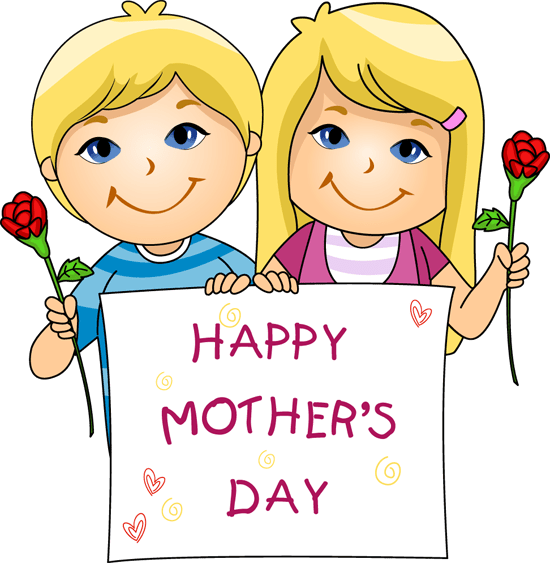
This year, we are celebrating the 107th year of Mother’s Day to honour all mothers and motherhood worldwide. At the initiative and tireless devotion of Anna Jarvis, the modern Mother’s Day began in the United States. US President Woodrow Wilson officially proclaimed in 1914 the second Sunday in May as the day of celebration to honour the memories and the sacrifices of mothers made for their children.

Today, I would like to share with everyone a beautiful poem by Bruce Lansky for this occasion. Bruce Lansky is from Minnesota and America’s bestselling author of children’s poetry books. His poems are funny, hilarious, and something that will make you smile.

So, here it is…

On Mother's Day
By Bruce Lansky

On Mother's Day it isn't smart
To give your mom a broken heart.

So here are things you shouldn't say
To dear old mom on Mother's Day:

Don't tell her that you'll never eat
A carrot, celery, bean, or beet.

Don't tell her you think smoking's cool.
Don't tell her you've dropped out of school.

Don't tell her that you've drowned the cat.
Don't tell her that she looks too fat.

Don’t tell her when you're grown you'll be
A starving poet—just like me.

Happy Mother’s Day to all.

Ninagracia


References:

HANDWERK, B. (2014, May 10). Mother’s Day Turns 100: Its Surprisingly Dark History. National Geographichttps://www.nationalgeographic.com/culture/article/140508-mothers-day-nation-gifts-facts-culture-mom

History.com Editors. (2011, April 29). Mother’s Day 2021. HISTORY. https://www.history.com/topics/holidays/mothers-day

Lansky, B. (n.d.). On mother’s day by Bruce Lansky. Poetry Foundation. https://www.poetryfoundation.org/poems/58518/on-mothers-day-56d23cf7ac33d

Mother’s Day. (n.d.). NicePNG. Retrieved May 8, 2021, from https://www.nicepng.com/ourpic/u2w7i1q8w7y3q8r5_mothers-day-is-more-than-the-day-we/

Rhythm and Rhymes: The Road Not Taken (By: Robert Frost)

The Road Not Taken

By

Robert Frost
(1874-1963)

“The Road Not Taken”  is a narrative poem published in 1916. It is one of the most famous poems that captured the fascination of so many people and often misunderstood or misinterpreted.

Some people would say that there is no single meaning or interpretation of a poem and its significance lie in the mind of the writer at the time he wrote the poem.


The Road Not Taken

Two roads diverged in a yellow wood,
And sorry I could not travel both
And be one traveller, long I stood
And looked down one as far as I could
To where it bent in the undergrowth;

Then took the other, as just as fair,
And having perhaps the better claim,
Because it was grassy and wanted wear;
Though as for that the passing there
Had worn them really about the same,

And both that morning equally lay
In leaves no step had trodden black.
Oh, I kept the first for another day!
Yet knowing how way leads on to way,
I doubted if I should ever come back.

I shall be telling this with a sigh
Somewhere ages and ages hence:
Two roads diverged in a wood, and I—
I took the one less travelled by,
And that has made all the difference. (Source)

Here’s a short recap of the poem:

The narrator in the poem encountered a problem when the road he was travelling became two separate paths. As a solo traveller, he could not take both routes. He stood for long to see where each road would lead him. Since he cannot travel on both paths, he was considering the best possible option before deciding which direction to take. However, he could not see the road very well because the forest was dense with leaves and vines.

He figured out that taking the other path was a better option because it was grassy. It looked like no one had walked there. Upon walking on that road, he realised that the grass had worn away the same as the other road because they both been travelled equally. In other words, the same number of people must have walked on that road.

Both roads have a similar condition of wear. Without uncertainty, he decided that over time he would take the other road even though he had doubts if he would ever come back there again.

At some point in the future, he would tell that he was confronted with a problem when two roads diverged in some wood. He had to make a hard choice about which route to take. His decision to take the road that was less travelled by made all the difference in his life.

**********

The Road Not Taken is the most well-known poem of our time. After reading it through, I was deeply immersed in thoughts for its complexities and sophistication.

Poems are presented to us to be enjoyed and interpreted. It is not something that we can argue or prove, instead, it is for us to understand the significance of every single word the writer was trying to express.

The message in this poem is about making a choice. Every day in our lives we make simple choices– what food to eat, what clothes to wear, what shows to watch on the television, or where to go for our next holiday. We make hard choices too where our lives, our friends and families, our total well-being, our future and career entirely depend on that choice.

Making a choice is more difficult if what we are hoping to achieve is not visible on the other side of the road. Making a wise decision and picking the right path is the choice that we all have to take.

If our actions resulted in the improvement of our lives, then that decision to take that path had a positive outcome.

No matter which road we take, it is a considerable risk, and all we can do is hope for the best. Our choices will always make a big difference in our lives.

This is my personal view of this poem. If you have your own, I’ll be glad to hear it from you.

Till next time, enjoy the pleasures of life.


Ninagracia

____________________

References:

https://www.sparknotes.com/poetry/frost/section7/page/2/
https://susanbaroncini-moe.com/please-stop-misinterpreting-the-road-not-taken/
https://en.wikipedia.org/wiki/The_Road_Not_Taken


Read-view: Way of the Peaceful Warrior

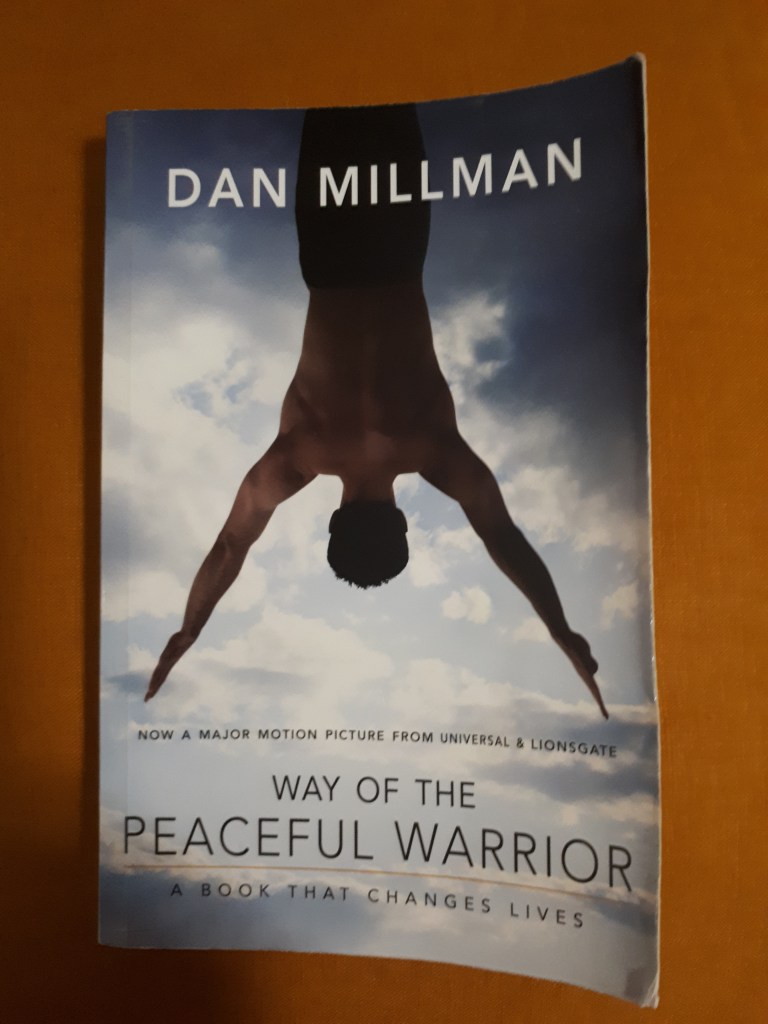
WAY OF THE PEACEFUL WARRIOR
A Book that Changes Lives

By: Dan Millman

The book says it would change lives, but I don’t think it changed mine.

Here’s why…

  • Way of the Peaceful Warrior is a real-life story of a world-champion athlete, Dan Millman, the author himself. He spoke about his spiritual journey and his search for true happiness.
  • The author describes his close relationship with his friend Socrates and how they develop a teacher-student relationship where trust and loyalty existed between them.
  • The story is partly fictional and partly autobiographical; hence it was written as a novel.
  • The author incorporated some made-up events, which made me agonise over the validity of the story and regarded that such events were real.
  • The author didn’t say why Socrates was given a job to educate him to be a warrior. I struggled to believe that out of the billions of people here on earth, he was hand-picked by some unknown universal power to learn about the ways and life of a warrior.
  • There were some excellent passages in the story that I genuinely love. Still, I found it very difficult to put my faith into those teachings. First, it only tells you what to do, but it never tells you how to do it. Second, I believe that to apply it to your life, you will need someone to give more detailed information and perhaps dig deeper into the meaning of those passages. Reading it alone would not help that much.

The story goes into astonishing levels of details and unnecessary amount of information.

The ending of the story was not something I anticipated. I was expecting for that BIG ending – the big lesson in life like the ultimate discovery of true happiness.

I was hoping for something I could take with me as a gift of enlightenment or searching for my soul to find my true calling. But I guess, this book is only for pure entertainment, and not a “How-to” manual.

And yes, I believe that Socrates was real. He was a living, breathing human being who suffered from a heart attack. 

And no, I don’t believe that he had some kind of magic or mystical power. I am not convinced that he can transport himself to different places and can read and manipulate your mind. I am not convinced either that he glows and can make himself disappear without a trace, which by the way, it seemed like it did not bother the author.

It seemed odd too that Joy (or Joyce) was also part of Socrates mystical adventure. Through his intervention, she met Dan. And then he sent her to “dreamland”, made her disappear and re-appear again and then back into Dan’s real world and then get married.

It would have been a nice fiction-fantasy story if it was intended to entertain. If the purpose of the story is to help change lives as initially claimed, then a real and accurate account of every event would perhaps speak highly for the integrity of the story.

You may and may not agree with me, and I would love to know your thoughts on this book.

All in all, there was some light humour that put a smile on my face.

So, next time you stop at the gas station, watch out for an old man with shiny hair. You never know, you could be his next student.

Till next time, enjoy the pleasures of life.


Ninagracia

Read-view: Two by Two

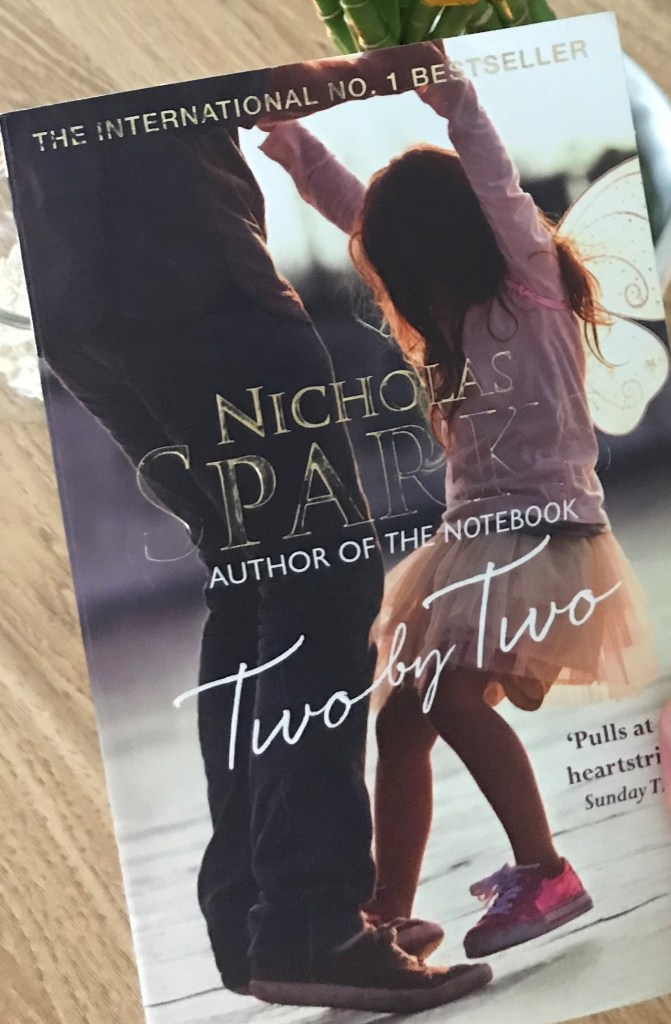
Two by two
By: Nicholas sparks

Two by Two is a story that shows no one should never walk alone during the difficult times in their life.

This post is my interpretation of the story and what brought me to react towards certain things and change my perception of everything around me.

Two by Two by Nicholas Sparks is a first-person narrative. The story is told by a character named Russell Green.

Russell’s narrative voice is very appealing. Most of the time he is earnest, but there is always an air of humour and fun every now and then when he speaks. He uses some common modern slang expressions. When he is angry, sad, or worried, it is not hard to detect all those feelings in his tone of voice.

First, the characters in the story, who are they?

Russell Green is the central character in the story.

He is a successful advertising executive, married with a young daughter, and owns a beautiful house in Charlotte, North Carolina.

The other characters in the story show different personalities, attitudes and views of the world and the life they live in.

For instance, Vivian, Russell’s wife – after a long absence from work, she recently got a job as an in-house PR Officer working directly with the CEO of a real estate developer. Before she met Russell, she was a successful publicist for a talk show host in New York. Having a child prompted her to stay at home and look after their daughter and the household. She wants to raise her daughter according to the lifestyle she imagines and establishes it early in her childhood. Her materialistic ideals, such as an easy life, job security, and money, was unimpressive and selfish. Vivian is a strong-willed woman, ambitious and manipulative.

Marge, on the other hand, is not only Russell’s older sister but is the driving force in Russell’s life. She is also a best friend, a confidant, a companion, and adviser – all rolled into one. When life seems too much for Russell to bear, she will be there for him to lean on. Marge is the type of person you wish she were your sister also.

Russell describes his close relationship with his parents and how they accepted the concept of same-sex relationships. They are very supportive of Marge and her partner Liz on their journey.

And then, London is the daughter of Russell and Vivian. She is almost six years old, and her bubbly personality always puts a smile on Russell’s face.

Lastly, Emily was Russell’s former girlfriend.  Her unexpected presence in his life became the moment when a surprising and beautiful friendship is formed.  

Now, here’s a little bit about the story…

Two by Two is about love and relationships – love between husband and wife, between friends, between parents and children, and love between brother and sister.

It is a story of a family going through significant changes and loss, and how each and every one of them has their own way of dealing with their grief. It shows that loss has a way of bringing out the best in each of them.

The story brings about a hard choice between the life that Russell thinks he can still fix and a life that is simple and uncomplicated.

When it seems like Russell has it all, and success is at the top of its peak, an unexpected turn of events suddenly changes the course of his life. His marriage, his livelihood and his career took the hardest hit.

Here’s what I think about the book and the story…

The book is a long read. It goes into astonishing levels of details. There is unnecessary small talk that could have been omitted to make the story flow faster and read a lot easier. It is easy to lose one’s concentration, and I lagged behind and lingered for a little while because of so many details and the amount of information in the story, which I think is not essential. I felt like I was dragging my feet to move on to the next chapter.

There are flashbacks in every chapter of the story, introducing each character and events in his past life. Sometimes, there are too many, too much and too long introductions.

Nevertheless, the author took me out of my real world, and he took me on a journey into Russell’s world. When I was in his kitchen, I smelt the sweet aroma of the glazed carrots he was cooking in the oven. Then, I was in his living room, witnessing the argument going on between him and his wife, Vivian. I felt the sudden need to butt in and give Vivian a piece of my mind. Somehow, it made me very angry, and I wanted to pull Russell’s earlobe and tell him off-“Stand up for yourself, will you!”

I started hating Vivian for her selfishness and the way she treats Russell. I saw everything and heard everything, and it made my blood boil.

I am not satisfied at all with the ending of the story, especially with Vivian’s change of heart and getting away with a clean slate. Whatever transpired when Vivian and Marge met up to say their good-byes, my suspicion was that Marge had something to do with it. Marge always fixes everything. Vivian suddenly became one of the good guys. Whatever happened at that time, I guess we will never know. As for me, it did not change anything. I still don’t like Vivian.

What moved me…

There are some beautiful moments in the story. One of them was the dance that Russell and his little daughter had that day. This is what is going through in his mind at that very moment…

          “It was, I realized, the first dance I’d ever shared with my daughter, and I didn’t know when or if it would happen again. I couldn’t imagine dancing with her in a few years – by then, the idea would probably embarrass her – so I lived in the moment and gave myself over to the dance, thankful for yet another wonder at the end of an already unforgettable week.”

We often lose sight of the fact that as we watched our children grow over the years, their free spirits would always fill our hearts with hopes and dreams. They may not know what we are going through in our lives, but they still help us get through the day. It is seldom that we will find a soul who will hold your hand or walk beside you to pass through that untried door, but good friends and family will always stand by your side all the time.

Our society is also rapidly becoming focused on the socio-economic status of every individual. We always aspire to live on the high-end of the spectrum, a jet-setting lifestyle, lots of money and power. That makes me ask these questions: When is it enough? How much is enough?

Apart from that, would it make you think twice if this story happened to you? Would you feel what Russell feels and would you consider doing what you want Russell to do?

Till next time.


Cheers!


Ninagracia

In Conversation with the Poem: Giving

When we hear the word “giving”, the first thing we think about is a GIFT.

We give gifts to establish or strengthen our relationships with our friends and family.

“Giving” means different thing to some people. It is an emotion we feel towards other people or even to our self.

Poetry is a gift that a writer can give to their readers to help them understand themselves and even make them think.

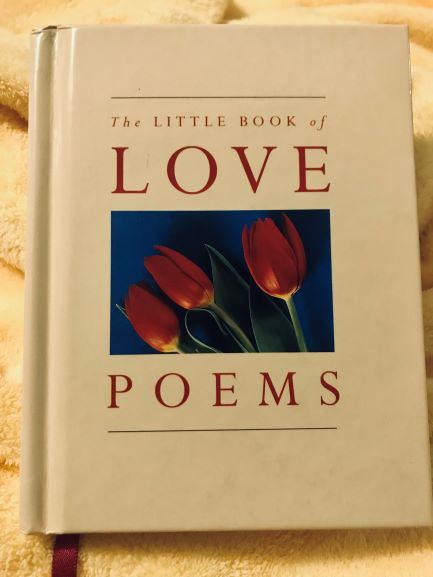
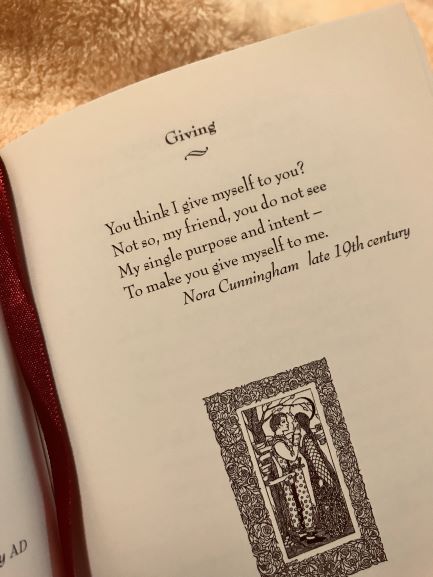
Here is a poem from The Little Book of Love Poems.

“GIVING” is written by Nora B. Cunningham. It is concise but direct, and it makes you think.

Take special note on the last line.

First, here is a snapshot of Nora B. Cunningham. From the information I gathered, here’s a little bit of who she was.

Nora Belle Cunningham was an American poet. She was born in Kansas on July 23, 1887.

Her first poem was published in “Youth’s Companion” in 1920, and her career continued for the next 55 years.

Her poems were published in magazines such as “Commonweal”, “Lyric”, “The Harp”, “Poetry”, and in newspapers such as “New York Times”, and “Kansas City Star”.

She never married and devoted her life caring for her invalid mother and a sister who became disabled by arthritis.

She died on September 28, 1975. Her papers and correspondence are archived in the collection at Wichita State University.

Meaning of the poem:

Giving is a short poem that conveys a powerful message that the author wanted to get across to her readers.

Her words were sharp and clear, that made it easy for her to connect to her readers.

The author spoke about self-love.

What she was saying was that giving was not all about love, care, and help, but it is also about helping the person you care the most to appreciate herself and her worth.

It is about liberating and giving herself a daily priority and a stamp of approval to become the person she wanted to be.

In this poem, I could only visualise what was going on the author’s mind. It made me connect with her like her desire to be a strong and independent person.

So, there you go. Feel free to send in your comment and views on this poem. I love to hear your opinion on this one.

Till next time, cheers!

Ninagracia

Sources:
https://allpoetry.com/Nora-B-Cunningham
http://specialcollections.wichita.edu/Collections/ms/79-03/79-3-A.HTML
The Little Book of Love Poems. (2002 ed.) Giving: Nora B Cunningham (late 19th  Century)

Read-view: The Alchemist

The Alchemist
25th Anniversary Edition
By: Paulo Coelho

I took a deep breath, and when I looked at the clock, it was already 5:00 a.m.

I couldn’t believe that I did not sleep the entire night because I was reading a book.

What was unusual about this book that kept me reading the whole night? Why couldn’t I put it down?

Here’s what I can tell you about it. It’s everything!

When I finally put it down to grab at least a couple of hours of sleep, I looked at the cover of the book once again and sighed, WOW!

WOW, for one extraordinary reason that it was breathtaking and engaging.

The story has two parts.

  • Part One is all about the boy’s desire to travel and to know the world. It is what he always wanted to accomplish. It is his Personal Legend.
  • It is also about the recurring dream that set him on a journey to go to the Pyramids of Egypt to find the treasure that will make him very rich.
  • In Part Two, the boy met the Alchemist who taught him lessons about life, people, the Soul of the World, and about following his dream.

This post is not a book review, but only my interpretation of the story and what brought me to react towards certain things and everything around me.

The entire story contains messages that are so broad, intense, and meaningful. It is vibrant and truthful because we all have lived through it in our lifetime. It made me rethink our approach towards life, people, and loving someone, and how some of us abandoned our strong desire to achieve our dream.

The story took me to another part of the world – my world, and my journey.

Here are some passages that I got particularly connected with:

          “Everyone seems to have a clear idea of how other people should lead their lives, but none about his or her own.”

Come to think of it, it is true.

You and I have probably experienced this one time, or more often in our lives. Some people seem to know what is best for you and what is not. They push to you their own opinion about how you should live your life without regard to your feelings or your situation in life. They want you to be the person they think you should be. They seem to know who you should be. And if you didn’t listen to them, they get angry, and they believe you deserve the life you currently living now.

But the truth is, we all have the ability to choose our path and how we want to lead our lives. No one could do that for you, nor could know this except you – because your heart knows what is best for you.

The boy in the story knew that. He traveled to different places, met new people, and become friends with them but he doesn’t need to spend so much time with them because he has to move around again. That is why travelling appealed to him.

       “When you want something, all the universe conspires in helping you to achieve it.”

Some of us have chosen to abandon our dream. We allowed those negative feelings and beliefs prevent us from fulfilling our strong desire to see the reality of our vision.

Sometimes, we embraced the idea to dream about our dream because we have already got used to the way things are. We are afraid of change – to change our ways of life, our environment, or who we are.

Some are only afraid that they may not realise their dream. And that there is nothing left for them except concede defeat and give in to disappointments.

But there was a boy, the boy in the story had decided to follow his dream-his Personal Legend and find the treasure. He would travel to Egypt, and from there, he would look for the treasure.

Everything that had happened to the boy occurred between sunrise and sunset. He was a shepherd that morning when he left the fields of Andalusia. He crossed the sea to another continent. By the time the sun began to set, he was already in another country, a stranger in an unfamiliar place, no money and no longer a shepherd.

He understood that the chain of events that happened were all linked together to help him achieve his dream.

In conclusion, the boy didn’t realise that he was already living his dream. He achieved his goal to travel and to know the world simply because of his desire to find the treasures.

He met different people along the way. He made new friends and learned from them. He walked the Sahara Desert, felt the wind on his face, and discovered that even the sun, the wind, and the desert have their limitations on what they can do.

He found out that the treasures he was searching for that would make him a wealthy man were right where he came from because they were just within him all those times.

The treasures were material symbolism. I believe that the true meaning of this is that the treasures were all about the wisdom and experiences he learned on his travel. These are gems that he can share with other people to help them understand everything about life, people, and the world itself.

So, what do think? Feel free to send in your comment. I love to hear it.

Till next time.

Cheers!

Ninagracia

In Conversation with the Poems: The Look

I dare you, try saying this word – sphenopalatine ganglioneuralgia.

I know, I know! It’s a mouthful, isn’t it? It is already hurting my brains.

But anyway, that word, (I dare not say) is the scientific name for Brain Freeze.

We get this from eating or drinking something very, very cold.

I don’t want to go very scientific with this one, but personally, I associate brain freeze when my brain is telling me to stop, take a break or take it easy.

Writing can sometimes take away our energy. We hit a roadblock. We stop thinking, and we get distracted very easily.

We feel tired, very sleepy, and unproductive.

It is okay to rest and re-invigorate our body because our imaginations are dried up. No matter what we do, nothing comes out of our head.

So, have you tried poetry yet?

Poetry is another form of literature that we use to express our imagination.

Some people find poetry boring.

But here’s a thing: It doesn’t take long to read a poem.

Reading short passages of poetry is relaxing. It teaches us to be imaginative, most especially when interpreting the significance of every word the author was trying to convey to his readers.

When the writing becomes tight and the days seems too long, I have with me my constant companion to help me relax and help me think of new ideas for my writing.

Here are my two favourite little books of poetry.

I have these books for so many years and never parted with them. They are both versatile books and easy to read. A perfect companion when you want to relax.

Let me show you one of my favourite poems from the Little Book of Love Poems.

The Look was written by Sara Teasdale. From the information I gathered, here’s a bit of who she was:

Sara Trevor Teasdale was born on August 8, 1884, to a wealthy family at St Louis, Missouri, U.S.A.

She was an American poet. Her work was characterised for its simplicity and clarity. Her poems are classical in style, passionate and romantic.

At a young age, she grew acquainted with Harriet Monroe and became part of Harriet Monroe’s literary circle Poetry.

In 1918, she won the first Columbia Poetry Prize, which is now known as the Pulitzer Prize for Poetry.

Her marriage to Ernst Filsinger in 1914 ended in divorce in 1929, and after that, she lived a life of a semi-invalid. After a painful bout of pneumonia, she took her own life with an overdose of barbiturates in 1933.

Sara Teasdale wrote seven books in her lifetime. Her collections of poetry include:

  • Her first volume published in 1907: Sonnets to Duse, and Other Poems
  • Her second collection published in 1911: Helen of Troy, and Other Poems
  • Her third collection published in 1915: Rivers to the Sea

Her last collection of poems in Strange Victory was later published after her death in 1933.

The Look is a very short poem, easy to read and full of passion from the author’s perspective.

In here, I can only visualise the author’s emotion, passion, and her strong desire and longing for that kiss.  Also, this poem could trigger some old feelings and sentiments to the readers that somebody has felt the same way before.

So, come on. Try reading one or two short poems every now and then. It will jazz up your mood, helps you think, and improve your creative expression.

Just remember rhythm and rhymes, and rhythm and beats. If you can easily get lost in music and songs, poetry will immerse you deep into the meaning of each word, because poetry is intoxicating, delirious, and captivating.

It is just simply lovely.

Till next time, feel free to share your favourite poem.

Cheers!

Ninagracia

Sources:

https://poets.org/poet/sara-teasdale
https://www.britannica.com/biography/Sara-Teasdale
https://www.poetryfoundation.org/poets/sara-teasdale
The Little Book of Love Poems. (2002 ed.) The Look: Sara Teasdale (1884-1933