

That’s what friends are for

IN CONVERSATION WITH THE POEMS

Poems by others, read closely and answered in reflection.

These two wonderful poems, which I particularly love and thought worth sharing with everyone, have been gathering dust in my old files.

The Poetry of Pausing

After reading this poem, I remembered that, like everyone else who struggles to put their phone down to talk to a friend, I looked at my busy schedule and asked whether I am a good friend or just busy. Sometimes all we need is a break from the busyness of our lives, and a brief chat with a friend can refreshingly lighten our load. This poem is a friendly reminder to slow down, connect with others, and make time for the people who matter.

A Time to Talk
—Robert Frost

When a friend calls to me from the road 
And slows his horse to a meaning walk, 
I don’t stand still and look around 
On all the hills I haven’t hoed, 
And shout from where I am, What is it? 
No, not as there is a time to talk. 
I thrust my hoe in the mellow ground, 
Blade-end up and five feet tall, 
And plod: I go up to the stone wall 
For a friendly visit.

About the Author:

Robert Frost was America’s most celebrated poet, earning four Pulitzer Prizes and serving as Consultant in Poetry to the Library of Congress from 1958 to 1959. His most famous poem, “The Road Not Taken”, explores the theme of choice.

The Poetry of Keeping the Gold and Collecting Silver

There is something magical about sharing history with someone, and a sheer joy in discovering a new connection. This poem is meaningful to me because I treasure my friendships and always welcome new ones. Old friends share our memories and life experiences, while new friends bring fresh energy and opportunities to connect. The poem celebrates the value of friendship in all its forms.

New Friends and Old Friends
Joseph Parry

Make new friends, but keep the old;
Those are silver, these are gold.
New-made friendships, like new wine,
Age will mellow and refine.
Friendships that have stood the test-
Time and change- are surely best;
Brow may wrinkle, hair grow gray;
Friendship never knows decay.
For ‘mid old friends, tried and true,
Once more we our youth renew.
But old friends, alas! may die;
New friends must their place supply.
Cherish friendship in your breast-
New is good, but old is best;
Make new friends, but keep the old;

Those are silver, these are gold

About the Author:        

 Joseph Parry was a Welsh musician and composer.The poem “New Friends and Old Friends” was written in the early 1890s, dedicated to his friends in Wales and Pennsylvania.

Till next time.

Cheers!
References

Ambrose, G. P. (1959). PARRY, JOSEPH (1841 – 1903), musician. Dictionary of Welsh Biography. Retrieved June 26, 2026, from https://biography.wales/article/s-PARR-JOS-1841

Poem: New friends and old friends by Joseph Parry. (n.d.). Poetry Nook. Retrieved June 26, 2026, from https://www.poetrynook.com/poem/new-friends-and-old-friends

Powell. (n.d.). How old is song/poem that begins “Make new friends, but keep the old, one is silver and the other gold?”. reddit.com. https://www.reddit.com/user/ResolveSweet3391/

Robert Frost. (2014, February 4). Poets.org. Retrieved June 26, 2026, from https://poets.org/poet/robert-frost

A time to talk by Robert Frost. (n.d.). All Poetry – The world’s largest poetry site : All Poetry. Retrieved June 26, 2026, from https://allpoetry.com/A-Time-To-Talk
Ikigai

Shush! We’re Reading
A book read-view

ikigai

What Kind of Book is Ikigai?

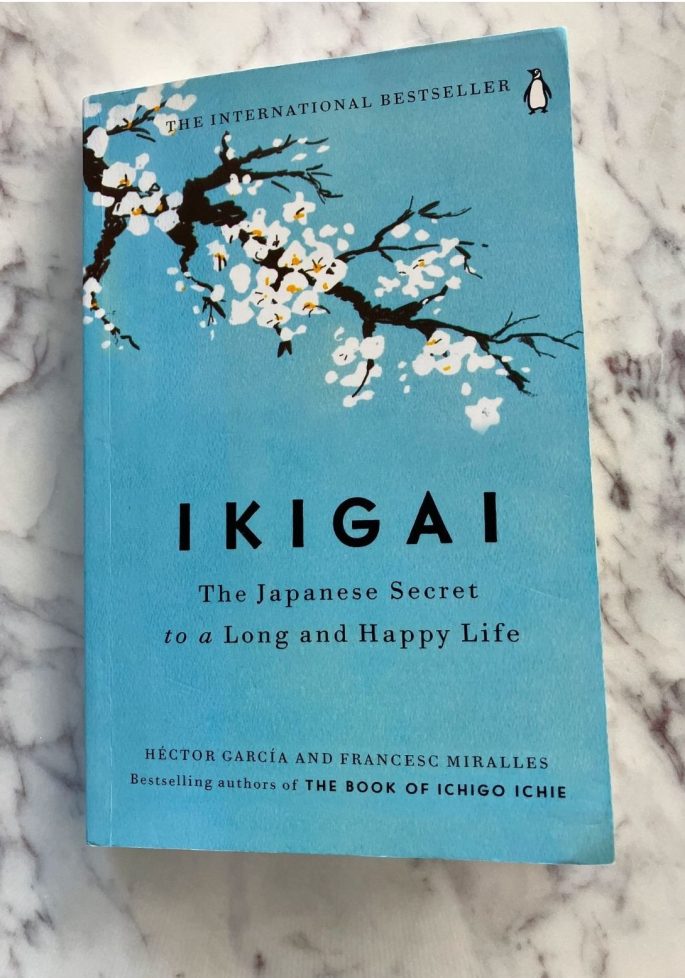
Ikigai is a non-fiction, self-help book that emphasises personal growth, psychology, wellness, and living a more meaningful life. Authors Hector Garcia and Francesc Miralles explore topics related to Japanese culture, health, and lifestyle. The content offers practical advice on diet, exercise, stress management, and maintaining community bonds. It provides insights into Japanese traditions to help readers find purpose in life. The book aims to reveal the secrets of Japan’s centenarians and guide readers in discovering their own Ikigai.

This post reflects my interpretation of the book and what motivated me to respond to specific ideas and the events around me. It contains messages that are broad, intense, and meaningful. It’s vibrant and honest because we all have experienced these feelings. It prompted me to rethink our approach to life, relationships, ageing, longevity, and discovering our purpose for a long, joyful life. 

What does Ikigai mean?

From books to casual chats, or even movies, we constantly pick up new words, and this one recently caught my attention. “Ikigai” – a word I had never come across before. So, I checked with dictionary.com, which states: “One’s reason for being, which in principle is the convergence of one’s personal passions, beliefs, values, and vocation” (“IKIGAI definition & meaning,” n.d.). However, yourdictionary.com defines it as a Japanese concept relating to having a reason and a sense of purpose in life, based on a person’s interests and talents (“Ikigai definition,” n.d.), which suggests that both meanings share the same core theme – something that makes life worth living. So, is the word Ikigai difficult or impossible to understand? The book identifies Ikigai as the reason we get out of bed in the morning.

The overall idea of Ikigai is what makes life worthwhile, or finding one’s purpose in life, which is linked to longevity.

Ikigai is a Japanese philosophy derived from two Japanese words: “IKI” meaning life or being alive, and “GAI” meaning worth. Together, it signifies life’s purpose or reason for waking up in the morning.

Here are some passages I felt particularly connected to.

(1) Give your brain a workout. The brain creates new connections and is revitalised. This is why it is important to expose yourself to change, even if stepping outside your comfort zone means feeling a bit of anxiety(García & Miralles, 2017, p. 21)

Our brain needs ongoing stimulation and mental exercises. When the brain forms deep-rooted habits, it clings to routines and no longer needs to think, which diminishes our ability to respond to our surroundings.

(2) Modern societies do what they are told to do, or what others do, rather than what they want to doThey often try to fill the gap between what is expected of them and what they want for themselves with economic power or physical pleasure, or by numbing their senses. (García & Miralles, 2017, p. 41)

We behave according to social expectations, such as being a good worker, believing we have no choice but to follow orders. We often tell ourselves that it is only a temporary measure to gain experience, pay the bills, or secure a better future, which aligns with our personal sense of family responsibility. Sometimes, when we feel an emptiness inside, we seek approval for everything we do, hoping it will fill the void. Still, in truth, it only fills the gap of what is expected of us. Until we discover our purpose in life, we will never truly experience or demonstrate that we have lived for something.

(3) Flow is the state in which people are so involved in an activity that nothing else seems to matter; the experience itself is so enjoyable that people will do it even at great cost, for the sheer sake of doing it. (García & Miralles, 2017, p. 57)

When we enjoy what we’re doing, we lose focus on the task because the experience is pleasurable and rewarding, making nothing else seem important. Time appears to fly, and the hours pass quickly as we feel in control of what we’re doing.

(4) Changes in the world around us are not accidental but rather form part of the essence of the universe. Everything we have and all the people we love will disappear at some point. Being aware of the impermanence of things does not have to make us sad; it should help us love the present moment and those who surround us.(García & Miralles, 2017, p. 171)

Nothing is permanent in this world. Since we are not in control of the universe, we should enjoy the moment with friends and family and not worry about the past or the future.

(5) Life is pure imperfection, and the passage of time shows us that everything is fleeting, but if you have a clear sense of your Ikigai, each moment will hold so many possibilities that it will seem almost like an eternity.(García & Miralles, 2017, p. 179)

Life passes quickly and lasts only for a short time. This reminds us that in those fleeting moments, we should share our lives with others to fill the empty pages when the world isn’t slowing down.

Do you know what ignites your spirit? It’s your Ikigai, waiting to be discovered by you.

Till next time,

Cheers!

References

Dayman, L. (2025, July 8). Ikigai in 2025: The Japanese concept of finding purpose in life. Savvy Tokyo. https://savvytokyo.com/ikigai-japanese-concept-finding-purpose-life/

García, H., & Miralles, F. (2017). Ikigai: The Japanese secret to a long and happy life. Random House. 

IKIGAI definition & meaning. (n.d.). In Meanings & definitions of English words | Dictionary.com.https://www.dictionary.com/browse/ikigai

Ikigai definition. (n.d.). YourDictionary: Definitions and Meanings From Over a Dozen Trusted Dictionary Sources. https://www.yourdictionary.com/ikigai